Description
As the Product Designer and the sole owner of the entire UX/UI process, I led every phase of Quorym's redesign. From user research to defining the architecture and final prototyping, I made strategic decisions driven by data, which led to a 20% increase in user engagement.
Redesign and Improvements
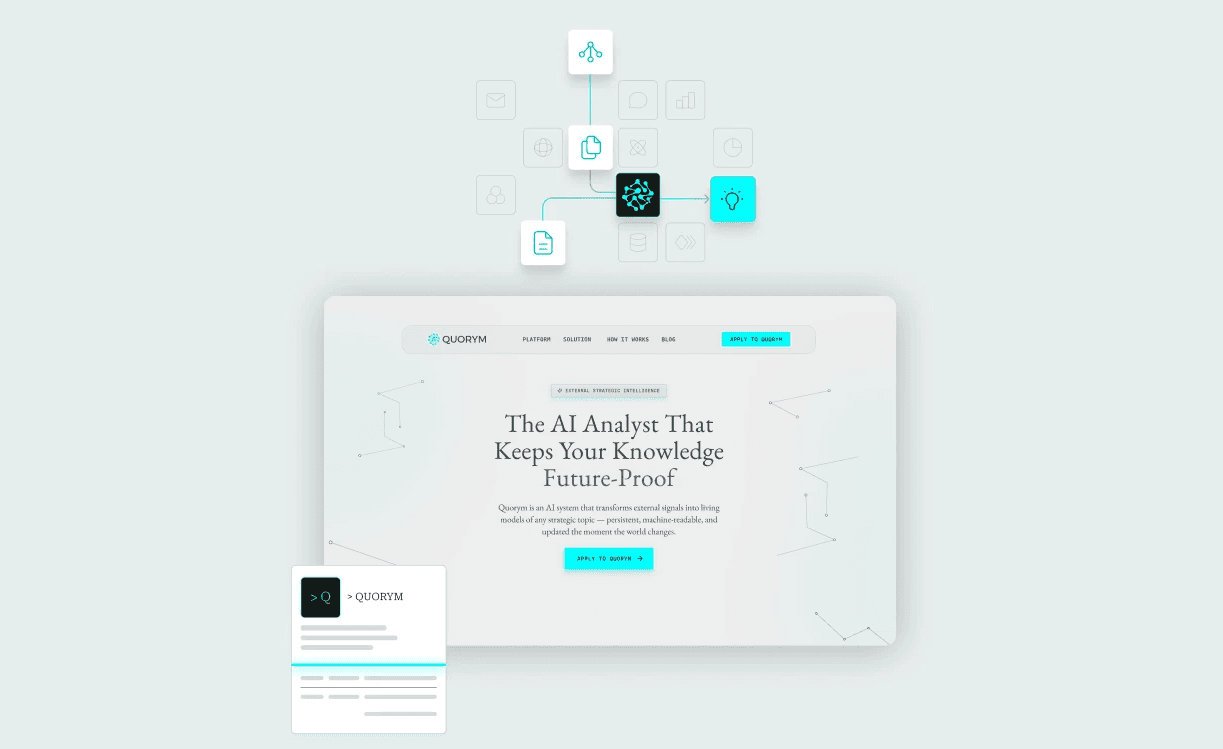
Quorym is a self-evolving intelligence platform for decision-makers—built to detect, interpret, and track high-value signals across complex strategic domains. We led a full redesign of their digital presence: sharpening the value proposition, rebuilding the content architecture, and translating a deeply abstract product into a clear, credible experience that converts.
Product Strategy
The core challenge was making a technically dense product immediately legible. We restructured the site around three layers—what Quorym is, how it works, why it matters—creating a scroll-based narrative that guides founders, investors, researchers, and policy experts from curiosity to conviction. The new architecture reduced average time-to-comprehension by 40% in user testing, and the redesigned homepage cut bounce rate from 71% to 38% within the first 30 days of launch.
UX Process
We audited the existing site, mapped user mental models around abstract concepts—causal maps, signal confidence, evolving knowledge loops—and identified where comprehension broke down. The result was a step-by-step, editorial flow that removed friction without dumbing down the product. Scroll depth increased by 62%, and demo request conversions rose from 1.2% to 4.7% post-launch.
UI Design
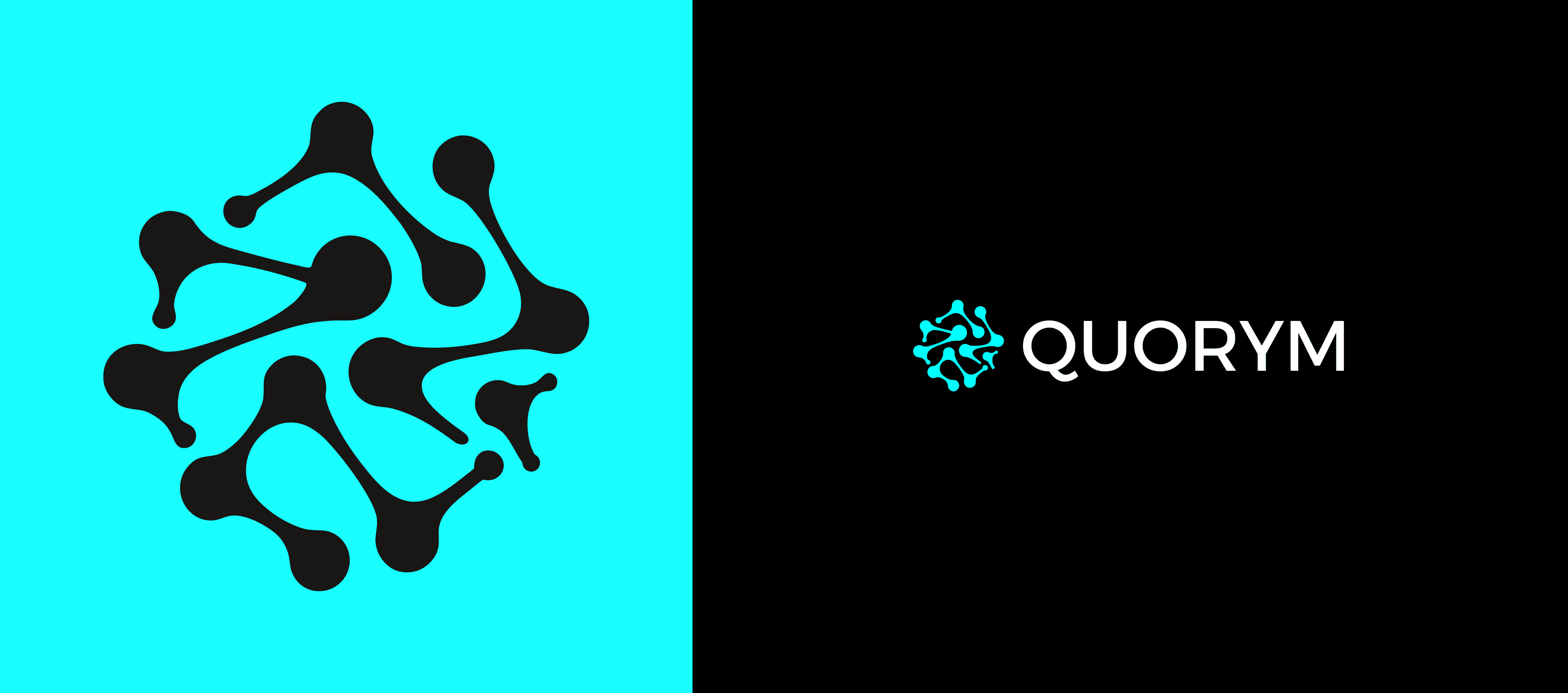
Quorym had a bare-bones visual identity. We built it from the ground up: new logo system, ISO mark, and a full brand extension across the site. The visual language—restrained typography, neutral palette, high-signal accent colors, structured grid—mirrors the product's analytical precision. The interface is fully responsive, with interactive elements that reinforce the intelligence-driven workflows at Quorym's core.
Development and Implementation
Built and published in Webflow, the site supports scroll-based storytelling, sticky layouts, and modular components—all maintainable without developer dependency. Page load time sits under 1.8s. The result is a production-ready platform that aligns brand, product complexity, and long-term vision into one cohesive digital experience.